2026 Legislative Session Report
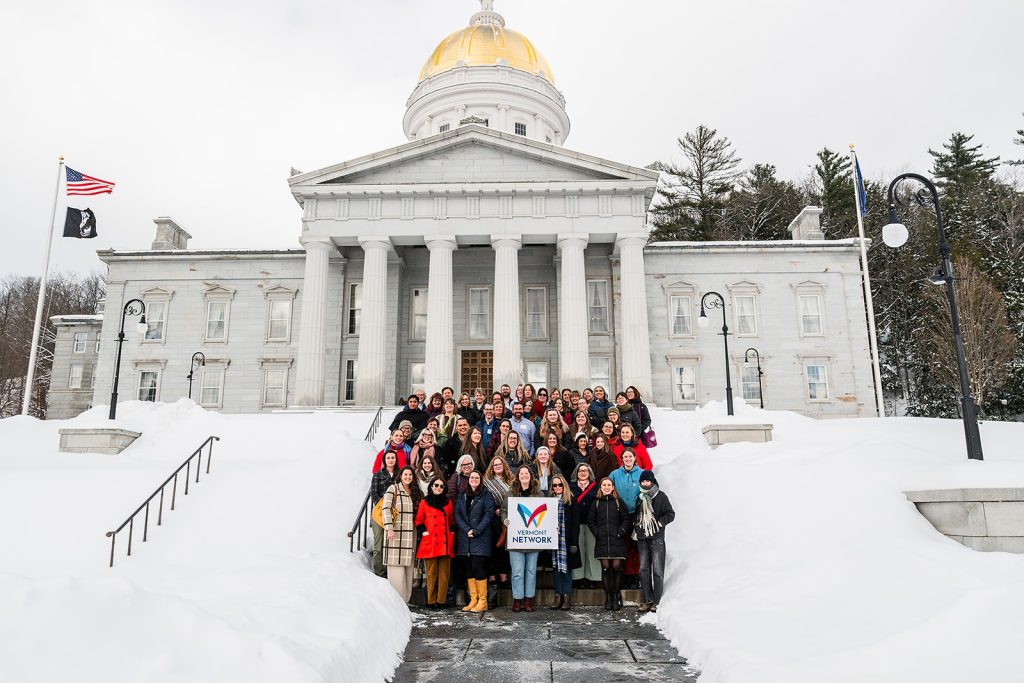
At our annual Advocacy Day at the State House this year, 100 survivors, allies, and legislators came together to discuss the issues facing survivors.
At the Network, we advocate for state-level policies that seek to uproot the causes of violence and support the well-being of survivors, their families, and Vermont communities.
In 2026, Vermont lawmakers took meaningful steps towards that vision – promoting financial security of survivors, responding emerging forms of technology-facilitated abuse, investing in essential services, safeguarding Vermont’s progress in the face of federal rollbacks.
Our 2026 Legislative Session Report highlights some of these successes and our continued work to build a safer Vermont.
Improving Legal Responses for Survivors
The non-consensual recording and sharing of explicit images—sometimes called image-based abuse—can cause a victim severe and lasting harm.
In many cases, these images circulate for years unnoticed, leaving victims without a fair opportunity to seek justice.
Legislation Passed
H.626 reforms criminal and civil law responses to image-based abuse and allows survivors to seek accountability and repair by:
- Extending the statute of limitations for video voyeurism and non-consensual image sharing
- Allowing victims to pursue civil damages for trauma-related harm
- Creating new criminal penalty for threatening to disclose images, compel someone to produce images, or compel someone to engage in sexual conduct
Protection orders, civil court orders requested by a survivor, are a critical legal tool for survivors. The orders offer important protective measures to prevent future harm, including requiring a perpetrator of violence to maintain physical distance or relinquish firearms of a period of time.
Firearms injury remains the leading cause of domestic violence homicide in Vermont. But all too often, domestic violence protection orders requiring firearm surrender are not effectively implemented.
Legislation Passed
H.606 reforms court and law enforcement procedures – and improves storage of relinquished firearms – to promote survivor safety. We extend our sincere gratitude to Attorney General Charity Clark and her office for championing this effort.
H.937 improves access to relief from abuse orders in cases where the defendant is on probation or parole. It also clarifies a key definition in the stalking protection order statute, to ensure survivors can access timely protections.
Victims do not always have the opportunity to speak to the court, especially when the person who caused harm is found incompetent or not guilty by reason of insanity.
Legislation Passed
S.193 establishes a new forensic facility to promote public safety and provide treatment to people charged with serious crimes who are found not guilty by reason of insanity or incompetent to stand trial. The bill importantly strengthens victim’s right to notification and to be heard by the court in forensic cases.
Providing victims the opportunity to speak directly to the court supports healing, restores a measure of agency within the criminal legal system, and helps ensure decisions are made with full awareness of the harm caused by violence.
Economic Justice for Survivors
When an abusive partner takes out debt in a survivor’s name without consent, it can destroy a survivor’s credit, limit access to housing or education, and undermine their safety and independence for years.
Legislation Passed
H.385 creates an accessible process to release survivors from responsibility for coerced debt and restore their credit records. The bill applies to a variety of outstanding debts, like credit cards and auto loans, and retroactively to debt already incurred. H.385 takes effect July 2028 to allow time for implementation.
Without safe, stable housing, survivors often face an impossible choice between homelessness and staying in an abusive relationship or unsafe housing.
Legislation Passed
H.938 reenvisions the system of care for people experiencing homelessness. The bill codifies Vermont’s existing shelter program for survivors within the Housing Opportunity Grant Program (HOP), recognizing the importance of services for survivors provided through Vermont Network member organizations.
Safety for Justice-Involved Individuals
Protecting people from violence while they are in state custody is a basic responsibility of government. Vermont has invested years in strengthening prevention and response to sexual violence in correctional facilities – and there’s still more work to do.
Legislation Passed
H.550 codifies gender equity practices for correctional facilities and federal PREA standards in state law, filling a gap left by the federal government rollbacks. Preserving important protections for incarcerated people in Vermont, including transgender and intersex people who face heightened risks of sexual violence while in custody, reflects a commitment to safety and dignity for all.
Access to Services for Survivors
The FY27 state budget includes investments in two essential services for survivors and their families.
Investments
$350,000 in one-time funding to prevent cuts to domestic and sexual violence services. These funds will preserve services survivors count on, like 24/7 hotline, and the hard-working staff who support them.
$130,000 in one-time funds to bolster supervised visitation services. Supervised visitation offers a safe setting for parent-child visits, including in many cases of domestic violence. These programs are essential, but have faced recent funding cuts and are not available in several Vermont counties. This investment will help prevent closures and move Vermont towards statewide access to services.
The Department of Homeland Security had long-standing guidance that Immigrant and Customs Enforcement (ICE) refrain from enforcement actions in sensitive locations, including domestic and sexual violence organizations. This guidance was rescinded in 2025. Survivors already face significant barriers to safety, and fear of immigration enforcement should never prevent someone from accessing help.
Legislation Passed
S.209 reinforces this principle by limiting civil arrests in designated sensitive locations, including domestic and sexual violence organizations.
Supporting Youth Services
Mandated reporting can protect children and youth and alert systems to potential abuse. While reporting can be an essential safety measure, it is not the only way to support a victim. Interventions must balance and meet the unique needs of each individual youth.
Legislation Passed
S.239 creates a new task force, which includes the Vermont Network, to recommend reforms to mandated reporter laws by October 2027.
The Hazing, Harassment, and Bullying Prevention Council advises the Agency of Education on how to help K–12 schools prevent and respond to harm, so students are safe and able to learn.
Legislation Passed
H.931 amplifies the voices of students and survivors on the HHB Council and updates its responsibilities to provide a strong foundation for its work.
Want to Get Involved?
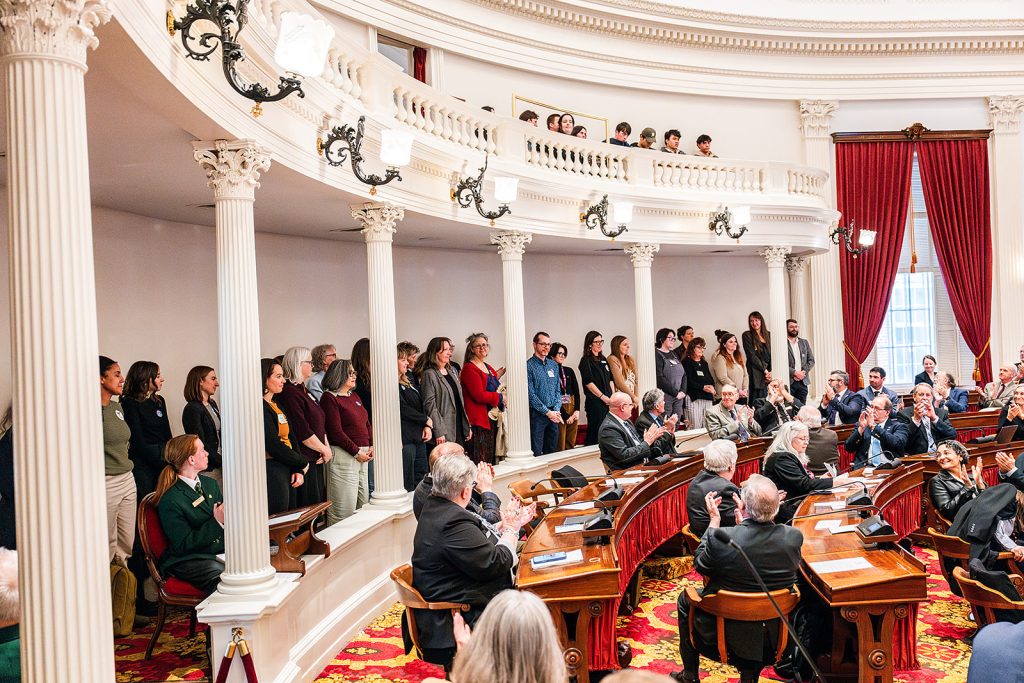
Survivors Uplift is a growing movement of survivors of domestic and sexual violence coming together to share stories, build community, and create survivor-centered change across Vermont.
Learn more about the program here.